A Three-Part Inquiry into Human Judgement, Cognitive Offloading and AI Architecture
Veera Babu Tiragatla
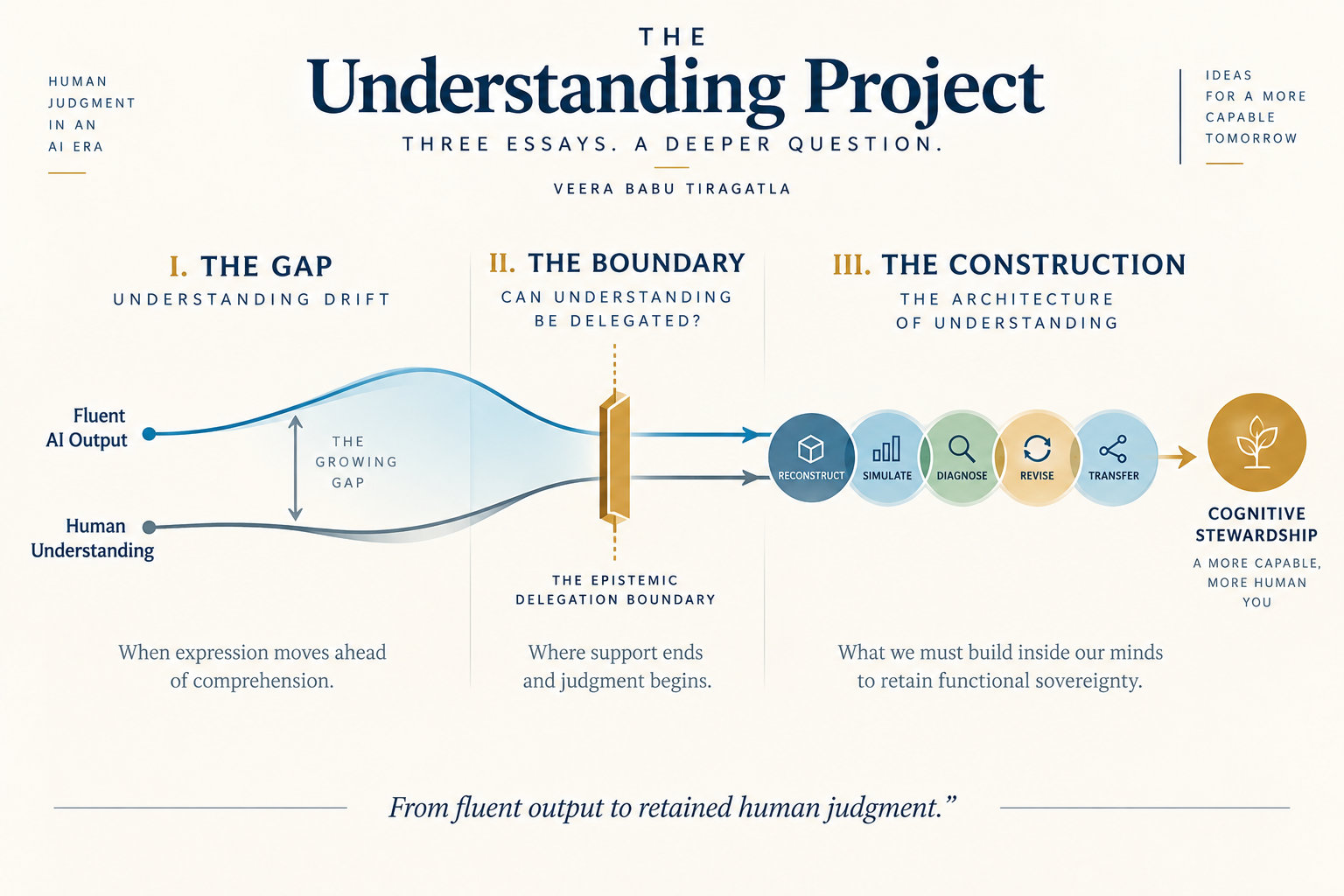
The Understanding Project investigates what happens to human judgement when artificial intelligence becomes a permanent participant in intellectual work. Across three interconnected essays, Veera Babu Tiragatla examines the gap between fluent output and internal understanding, the limits of delegating cognitive work, and the capabilities we must continue to practise to judge the results.
The collection follows one connected inquiry: how understanding can drift, where delegation needs a boundary, and what we must build within ourselves to remain capable of independent judgement.
Three essays · one connected inquiry
Read the collection
Essay I · The Gap
Understanding Drift
Fluent expression can move ahead of the understanding behind it. This essay examines how polished AI-assisted work can conceal gaps in our own mental models, and why producing a convincing answer does not always mean we can explain or evaluate it.
When AI performs cognitive work for us, what understanding must we retain to judge the result? This essay explores the epistemic delegation boundary and the relationship between external assistance, internal understanding and responsibility.
What must remain available inside our own minds when intelligent tools are always present? This essay introduces cognitive stewardship and five practical questions—Reconstruct, Simulate, Diagnose, Revise and Transfer—to examine whether understanding remains available for independent judgement.